Commercial Architecture Firm in India — Renascent Consultants
Two Partners. One Practice. 30 Years of Commercial Architecture.
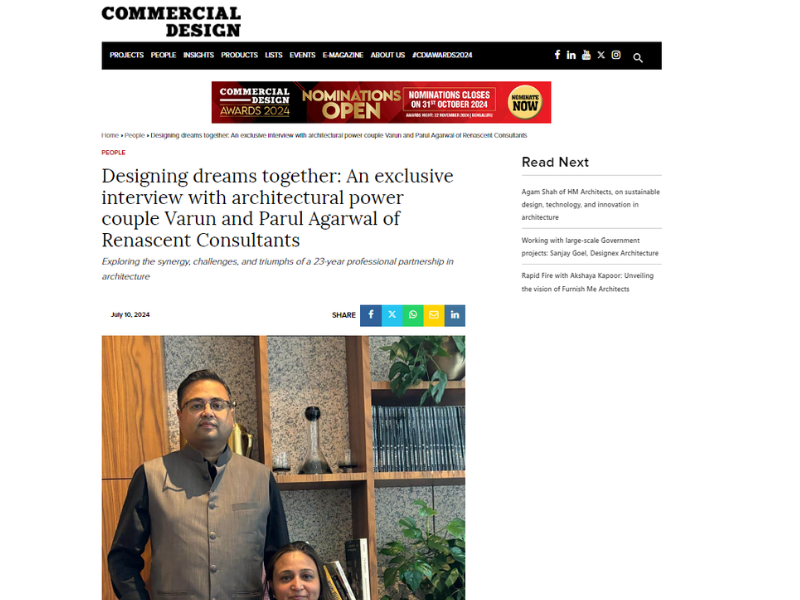
We crossed paths in the same office and clicked immediately — one of those rare professional matches where collaboration felt natural from day one. That was over 30 years ago, and the dynamic has held throughout our work as one of India’s established commercial architecture firms.
One partner’s strength is in design thinking: seeing the end result clearly before a single drawing is done, catching the details others miss, and making sure every project stands on its own aesthetically. The work needs to look right and feel right, not just function.
Varun brings the structural and technical side — building codes, engineering coordination, project management under pressure. He reads clients well and translates what they actually want into something buildable, which matters far more than most people realise.
Together, Renascent Consultants covers both ends of commercial architecture: the design and the delivery. Neither half works without the other.
Structuring a Partnership That Lasts
Running a commercial architecture practice with your spouse sounds complicated. It is, occasionally. But with deliberate structure, it works.
Clear ownership — each partner handles specific project phases and decisions independently, so there is no overlap or ambiguity about who is responsible for what. Hard stops on work talk — designated times and spaces where project discussions are off the table. Honest communication, regularly — not just when something goes wrong. When disagreements arise, we focus on the project outcome rather than who is right. That keeps things short and constructive.
How We Divide Responsibilities on Every Project
Responsibilities follow strengths, consistently. Design conceptualization and visual direction sit with one partner. Technical documentation, structural coordination, and client project management sit with the other. This division holds across all project types at Renascent Consultants and has worked well enough that we rarely need to revisit it.
Handling Creative Differences
Differences come up on almost every commercial project — and that is not a problem. Two people seeing a design differently usually means the better solution is somewhere between the two positions. The process is direct: put both views on the table, weigh them against what the client actually needs, and decide. No politics, no consensus for its own sake.
Commercial Architecture vs. Residential Design
Residential design is personal. The client is living in it, and the brief reflects their habits, preferences, and daily rhythms. Getting that wrong is immediately visible to the person who has to live with it.
Commercial design answers different questions. Who uses this space and how? What does the brand need to communicate? How does the layout support the operation? Comfort still matters in commercial architecture, but it is a byproduct of good planning rather than the starting point. The two types require genuinely different thinking, and treating one like the other is where most design mistakes originate.
Emerging Trends in Commercial Architecture We Are Working With
Sustainability is no longer optional. Clients expect green credentials, and increasingly the brief requires them. Biophilic design — bringing natural elements, light, and greenery into workspaces — has moved from niche to standard in quality commercial projects across India.
Flexibility is the other major shift. Post-pandemic occupancy patterns changed how companies use office and commercial space, and buildings now need to adapt over time rather than serve a fixed function. Smart building systems that respond to actual usage are part of how that gets addressed. Renascent Consultants integrates these where the project genuinely calls for them, not as checkboxes.
Sustainability and Green Design Standards in Commercial Projects
The basics are energy-efficient mechanical and electrical systems, low-emission materials, and water-efficient fixtures. Those cover compliance requirements. What actually moves performance is the design itself: building orientation to reduce solar heat gain, natural daylighting through well-placed windows and skylights, and shading that reduces mechanical load without cutting light quality.
Good sustainable commercial architecture is not a layer added at the end. It is built into the decisions made in the first few weeks of any project.
How Client Feedback Shapes Commercial Spaces
Commercial spaces have to work for more than one person — there is the client, the end users, and often the public. Feedback is not just useful at Renascent Consultants, it is necessary at every stage. Clients who engage consistently with the design process get better buildings. That has held true across every commercial architecture project we have worked on, regardless of scale.
What We Want to Build Next
Projects with a sustainability ambition — specifically those targeting high-level green certifications. We are also looking to expand into new sectors and build on the awards work already in our portfolio. Better technology integration in design delivery is another clear direction: better digital tools, better coordination, better outcomes for clients.
Frequently Asked Questions

Renascent Consultants
Renascent Consultants is a multidisciplinary architecture, planning, and strategic advisory firm focused on healthcare, institutional, commercial, and sustainable infrastructure projects across India. Known for combining design intelligence with operational thinking, the firm delivers future-ready environments that prioritise functionality, efficiency, human experience, and long-term value through systems-led architectural solutions.