Hospital Design in India for Patient Centric and Future Ready Healthcare Spaces
Introduction:
Hospital design in India is changing fast. Hospitals are not places where people go to get treatment. They are systems where patients, staff and equipment all work together.
Hospitals today are designed to help people heal work efficiently and perform well on the run. Modern hospital design in India focuses on creating spaces that’re good for patients. These spaces should reduce stress, help patients recover and make healthcare better.
Healthcare projects are using planning approaches. These approaches make sure hospitals can grow, are ready for the future and can adapt to changing needs and technologies.
1. From Hospitals to Healing Environments
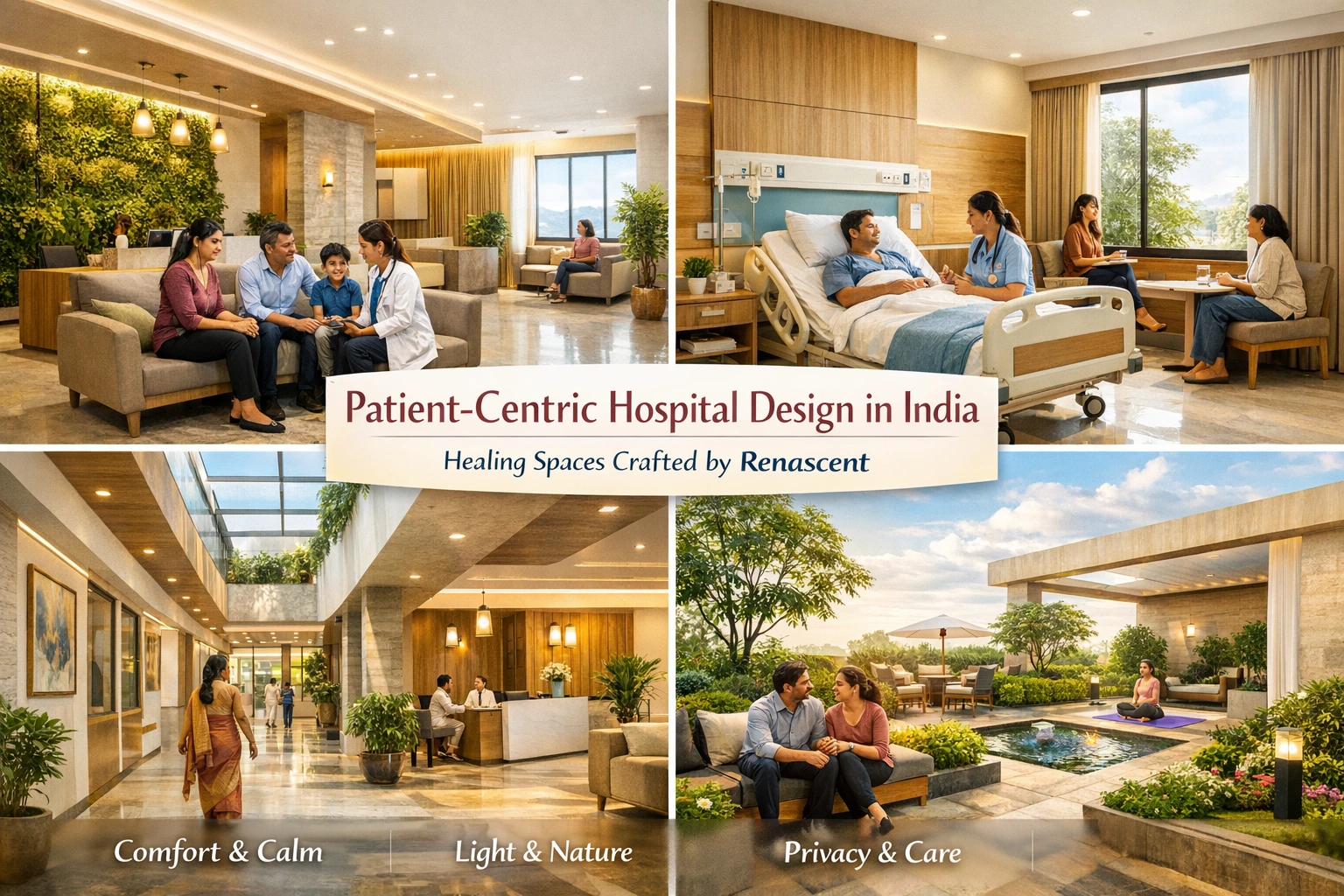
Hospital design in India is not just about making spaces that work. It is also about making spaces that help people heal and feel comfortable. The focus is on creating environments that help patients recover and feel better emotionally.
Renascent Consultant designs hospitals that think about healing. They use planning and human-centric design elements.
Some key things that make healing environments are:
- Access to light and ventilation
- Calming colors and materials
- Green and outdoor spaces
- Noise reduction strategies
- Room layouts that are easy for patients to use
These things make patients happier and help them recover better.
2. Future-Ready Infrastructure
Hospitals in India need to be flexible and adaptable. This is especially true after global healthcare challenges. These challenges showed how important it is to have infrastructure.
Modern hospitals are designed to handle changing needs without disruptions. This ensures they work well and last long.
Renascent Consultant designs hospitals that’re ready for the future. They think about expansion and technological advancements.
To make ready infrastructure hospitals focus on:
- Modular planning for flexible space usage
- Building systems that can grow
- Upgrading technology
- Being ready for disasters and emergencies
- Planning utilities and services efficiently
This makes sure hospitals adapt and work over time.
3. Patient-Centric Planning and Zoning
A key part of hospital design in India is making facilities easy to navigate. This reduces stress for patients and visitors. It also impacts the experience and efficiency.
Modern hospitals have zoning and intuitive layouts. This makes it easy to move around and reduces confusion.
Renascent Consultant makes sure centric planning is at the core of every healthcare project.
Some important aspects of patient-centric planning are:
- Clear wayfinding systems
- Separating private zones
- Easy accessibility for all users
- Reducing walking distances
- waiting and interaction spaces
This approach makes the user experience and operational efficiency better.
Also Read: The Transformation of Healthcare Architecture in India
4. Integration of Technology and Smart Systems
Technology is changing healthcare. Hospital design must include systems that improve efficiency, monitoring and patient care.
Modern hospital design in India integrates infrastructure. This supports future technological needs.
Renascent Consultant designs hospitals with a focus on technology integration and smart systems.
Some technologies used in healthcare facilities are:
- Smart building management systems
- Digital patient monitoring
- Automated lighting and climate control
- Integrated communication systems
- Data-driven infrastructure planning
These innovations improve performance and patient care.
5. Sustainability and Climate-Responsive Design
Sustainability is becoming important in hospital design in India. Healthcare facilities use a lot of energy and resources. It is essential to design buildings that’re efficient and environmentally friendly.
Modern hospitals work with the climate not against it. This improves efficiency. Reduces long-term costs.
Renascent Consultant integrates strategies into healthcare design. They create high-performance buildings.
Some sustainable design strategies in healthcare are:
- Energy- HVAC systems
- Rainwater harvesting and water management
- Eco-friendly materials
- Solar energy integration
- Climate-responsive building orientation
These strategies reduce impact and operational expenses.
6. Designing for Staff Efficiency and Wellbeing
Hospital design in India must also support healthcare professionals. They work in high-pressure environments. Efficient design directly impacts their productivity and performance.
Modern hospitals are designed to improve workflow and reduce stress for staff. They use planning and layout design.
Renascent Consultant prioritizes staff efficiency in hospital design.
To improve staff efficiency healthcare design focuses on:
- Optimized workflow and circulation paths
- Dedicated staff. Rest areas
- Reducing movement between departments
- Ergonomic workspace design
- Efficient emergency response planning
This results in performance and improved healthcare delivery.
Building the Future of Healthcare
Hospital design in India is changing. It is creating environments that balance functionality, patient experience and long-term adaptability. Healthcare facilities are designed as integrated systems. They improve efficiency and patient outcomes.
Renascent Consultant delivers healthcare spaces that’re efficient, scalable and designed for the future.
Ready to Design a Future-Ready Healthcare Facility?
Designing a hospital is not about construction. It requires planning, user-focused design and long-term vision.
Whether you are building a hospital or upgrading an existing one the right design approach ensures better efficiency, improved patient care and sustainable performance.
Looking for expert hospital design in India? Call +91-11-46541790. Connect with Renascent Consultant to create patient-centric, efficient and future-ready healthcare facilities.
Frequently Asked Questions