The Transformation of Healthcare Architecture in India
Introduction:
Healthcare Architecture in India is changing in a big way. Hospitals are not just buildings with equipment and doctors. They are places where people get better and where doctors and nurses work.
Hospitals need to be good for patients and staff. They need to be easy to use and help people feel better. In healthcare architecture in India, hospitals need to be ready for this growing population. They need to be good for the future.
Now hospitals are designed to help people get better. They have light and nice views. The colors and materials used are calming. Hospitals are designed to be quiet and easy to navigate.
In addition, modern healthcare projects increasingly follow the principles of campus planning in architecture in India. This approach ensures that hospitals are not just designed for current needs but are also prepared for future expansion, better circulation, and integrated infrastructure systems.
1. From Hospitals to Healing Environments
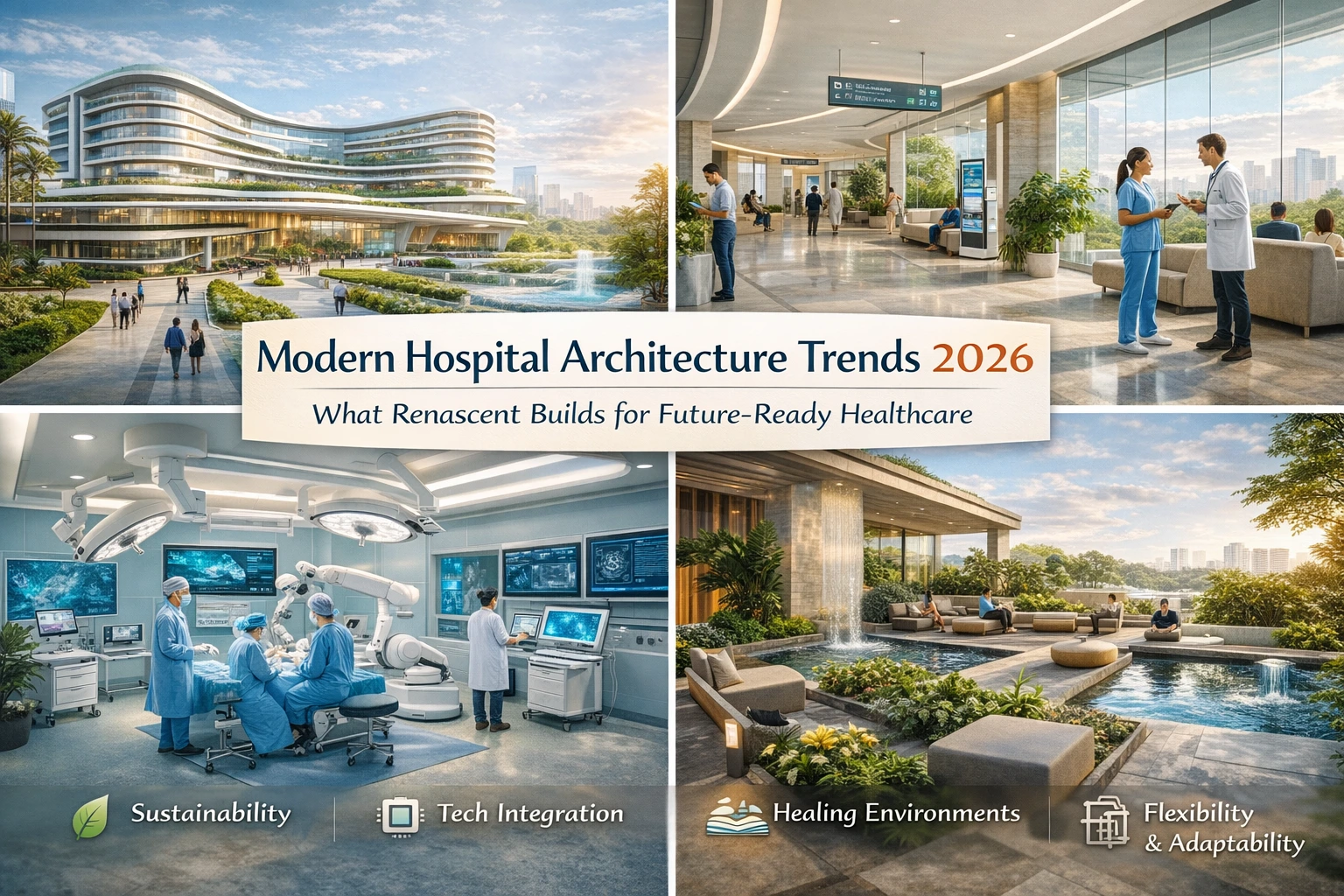
In healthcare architecture in India, hospitals are now designed to help people get better. They have things like daylight and nice views. They use calming colors and materials. They are designed to be quiet and easy to navigate.
These things might seem small. They make a big difference. They help people get faster and feel less stressed.
Renascent designs hospitals with these things in mind. They think about what patients need and what will help them get better.
Key elements that define healing environments include:
- Access to natural light and ventilation
- Use of calming colors and materials
- Integration of green and outdoor spaces
- Noise reduction strategies
- Patient-friendly room layouts
These design factors collectively contribute to faster recovery and improved patient satisfaction.
2. Future-Ready Infrastructure
In healthcare architecture in India, the pandemic changed how we think about hospitals. Hospitals need to be ready for anything.
Now hospitals are designed to be flexible. They have rooms that can be used for things. They have systems that can be changed easily.
This means hospitals can respond to emergencies without having to rebuild.
Renascent designs hospitals with flexibility in mind. They think about what might happen in the future and design hospitals that can adapt.
To achieve future-ready infrastructure, hospitals focus on:
- Modular planning for flexible space usage
- Scalable building systems
- Provision for technology upgrades
- Disaster and emergency readiness
- Efficient utility and service planning
Such strategies help institutions adapt without major structural changes.
3. Patient-Centric Planning and Zoning
In healthcare architecture in India, hospitals need to be easy to use. Patients should be able to find their way easily.
Now hospitals are designed with patients in mind. They have signs and easy-to-use layouts.
This means patients are less stressed and can find what they need easily.
Renascent designs hospitals with patients in mind. They think about what patients need and design hospitals that are easy to use.
Important aspects of patient-centric planning include:
- Clear and intuitive wayfinding systems
- Separation of public and private zones
- Easy accessibility for all users
- Reduced walking distances within the facility
- Comfortable waiting and interaction spaces
This ensures a seamless and stress-free experience for patients and visitors.
4. Integration of Technology and Smart Systems
In healthcare architecture in India, technology is changing healthcare. Hospitals need to be designed with technology in mind.
Now hospitals are designed with systems. They have systems that can be controlled from a computer.
This means hospitals can be run efficiently and effectively.
Renascent Consultants designs hospitals with technology in mind. They think about what technology can do to help hospitals run better.
Modern healthcare facilities incorporate technologies such as:
- Smart building management systems
- Digital patient monitoring
- Automated lighting and climate control
- Integrated communication systems
- Data-driven infrastructure planning
These innovations significantly enhance operational efficiency and patient care.
5. Sustainability and Climate-Responsive Design
Hospitals use a lot of energy. They need to be designed to be sustainable.
Now hospitals are designed with sustainability in mind. They use light and ventilation.
This means hospitals are better for the environment and use energy.
Renascent designs hospitals with sustainability in mind. They think about what’s good for the environment and design hospitals that are sustainable.
Sustainable design strategies in healthcare include:
- Energy-efficient HVAC systems
- Rainwater harvesting and water management
- Use of eco-friendly building materials
- Solar energy integration
- Climate-responsive building orientation
Such measures reduce environmental impact and improve long-term cost efficiency.
6. Designing for Staff Efficiency and Wellbeing
In healthcare architecture in India, doctors and nurses work hard. They need hospitals that are designed to help them do their jobs.
Now hospitals are designed with staff in mind. They have to-use layouts and places for staff to rest.
This means staff are less stressed and can do their jobs better.
Renascent designs hospitals with staff in mind. They think about what staff need and design hospitals that are easy to use.
To improve staff efficiency, healthcare design focuses on:
- Optimized workflow and circulation paths
- Dedicated staff zones and rest areas
- Reduced movement between critical departments
- Ergonomic workspace design
- Efficient emergency response planning
This leads to better performance and reduced stress for healthcare professionals.
Building the Future of Healthcare
Healthcare architecture in India is changing. Hospitals are being designed to be better for patients and staff.
Hospitals of the future will be designed to be good for people. They will be easy to use and help people get better.
Renascent designs hospitals that’re good for people. They think about what patients and staff need and design hospitals that are easy to use.
Ready to Design a Future-Ready Healthcare Facility?
Designing a hospital is not about building a building. It is about creating a place that helps people get better.
Renascent can help you design a hospital that’s good for people. They think about what patients and staff need and design hospitals that are easy to use.
As healthcare demands continue to evolve, the importance of strategic planning and design becomes even more critical. Institutions must adopt a long-term vision that balances functionality, sustainability, and user experience.
If you are planning a healthcare project, contact us today to discuss how we can help you design a future-ready facility tailored to your needs.
Frequently Asked Questions