
The Strategic Importance of Campus Planning in India
Introduction:
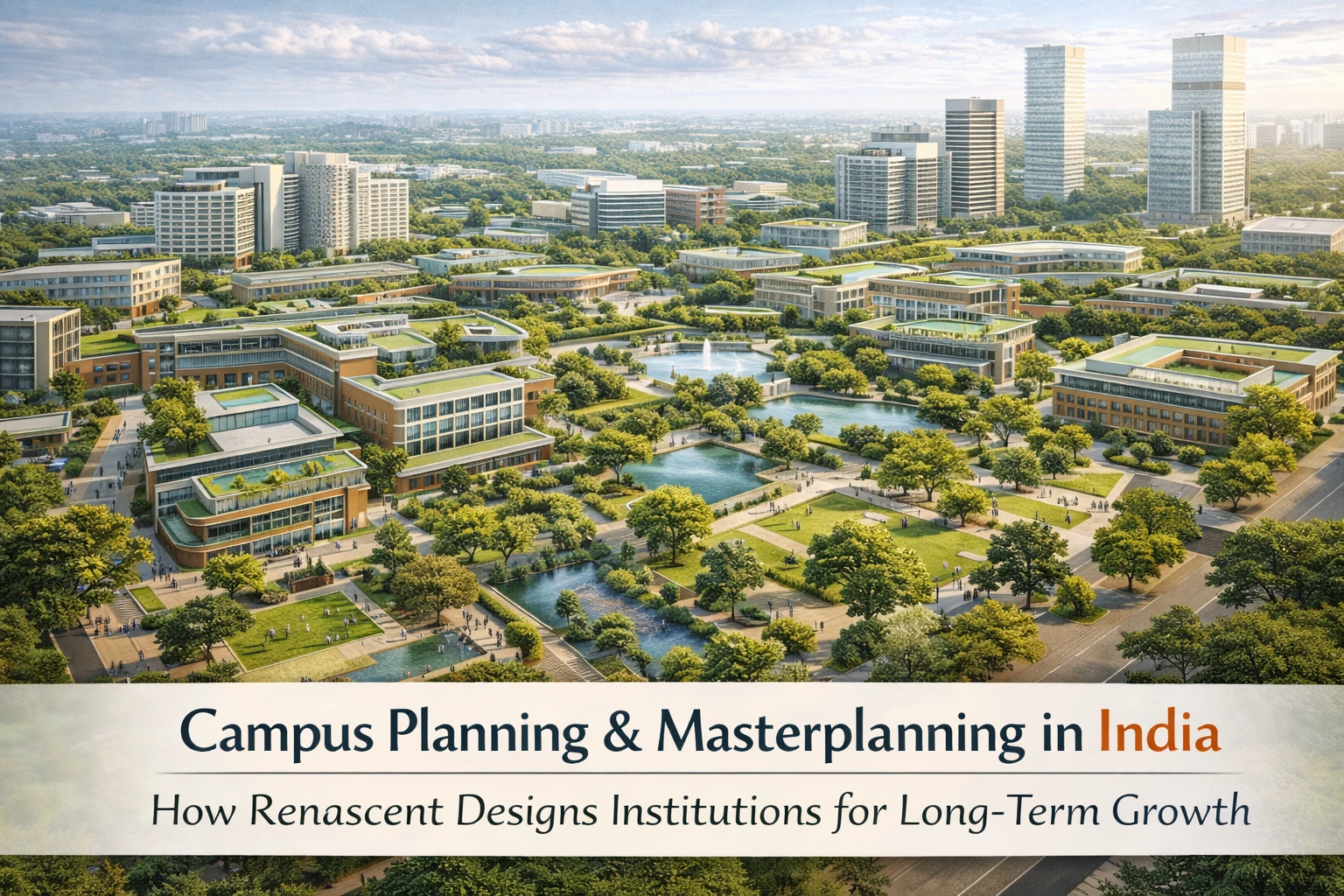
In India campuses are not a bunch of buildings. They are like cities where people go to get healthcare, education and do research. They are also places where people live and work together.
Hospitals are like one-stop shops for healthcare. Universities are places where new ideas are born.. When we build new institutions we want them to be ready for the future from day one.
So planning a campus is not about designing buildings. It is about making a plan that will help the institution grow and change over time.
By 2026 people are looking at three things:
- How can we make campuses bigger and better over time
- How can we make campuses easy to use and accessible to everyone
- How can we make campuses sustainable and good for the environment
At Renascent Consultants. we think of campus planning as a living thing. It is not a fixed plan. Something that can change and grow over time.
1. From Buildings to Systems: Rethinking Campus Planning
In the past campus planning in India was about putting buildings in the right place. Now it is about creating a system where everything works together.
A good campus plan includes:
- Movement networks, like roads and walkways
- Functional zoning, like areas for academics, residential and healthcare
- Infrastructure planning, like utilities and waste management
- Future expansion logic so we can add buildings without disrupting everything
We want to create a campus where everything is connected and works together.
2. Designing for Growth and Flexibility
One of the challenges in campus planning in India is that institutions are often built in phases. If we do not plan well it can lead to problems like:
- Many people in one place
- Roads and walkways that are hard to use
- Buildings that are not connected
So we need to have a clear plan for how the campus will grow and change over time. We need to:
- Plan each phase
- Leave room for expansion
- Make sure the infrastructure can handle the growth
- Avoid having to tear down buildings in the future
At Renascent Consultants. we make sure that each phase of the campus is complete and functional but part of a bigger long-term plan.
3. Making Open Spaces Useful
Open spaces are not empty areas. They are a part of campus life.
In campus planning in India, open spaces:
- Help people interact and work together
- Improve health by bringing in nature
- Regulate the temperature. Reduce heat
- Make the campus look and feel nice
of just having pretty gardens modern campuses use:
- Courtyards
- Shaded walkways
- Green spaces
- Interactive plazas
These spaces are not just for looks. Are functional and useful
.
4. Making it Easy to Get Around
In campus planning in India, a campus is only good if it is easy to navigate.
If the circulation planning is poor it can lead to:
- People getting confused
- Wasting time
- Operational problems
So we need to make sure that the campus is easy to get. We need to:
- Give priority to pedestrians
- Have entry and exit points
- Make sure everyone can access the campus
- Separate public and service movement
This is especially important in hospitals and institutions where movement can affect efficiency and experience.
Also Read: The Transformation of Healthcare Architecture in India
5. Planning for the Climate
With the environment becoming a concern sustainability is no longer a choice.
In campus planning in India, projects must address climate conditions such as:
- Heat gain and sunlight
- Natural ventilation
- Water management
- Energy efficiency
Some key strategies include:
- Building orientation for sunlight
- Using pathways and green buffers
- Harvesting rainwater
- Using materials
The idea is simple: we should work with the climate not against it.
6. Using Technology and Smart Infrastructure
By 2026 campuses are becoming smarter.
Modern campus planning in India includes:
- Mobility systems
- Digital infrastructure planning
- Energy monitoring systems
- Integrated facility management
Planning for technology at the beginning avoids costly upgrades later and ensures long-term efficiency.
Building Campuses that Last
Campus planning’s not just about design. It is about being responsible.
Institutions serve people for decades centuries. The decisions we make during planning define how well these spaces perform over time.
A good approach balances:
- Functionality
- Flexibility
- Sustainability
- Human experience
Renascent’s approach to campus planning in India reflects this balance. We create environments that’re efficient today and adaptable for the future.
Also Read: Hospital Design in India for Patient Centric and Future Ready Healthcare Spaces
Ready to Plan a Future-Ready Campus?
Planning a large-scale institution requires more than design. It demands vision, strategy and long-term thinking.
Whether you are building a hospital, university or institution the right planning approach ensures efficiency, scalability and sustainability from day one.
Connect with Renascents team to create a campus that evolves with your needs and stands strong for decades to come.
Frequently Asked Questions